technology
Jan 21, 2026
Health & Safety
Is your water safe today and over time? Learn how bacteria, biofilms, and plumbing systems cause millions of illnesses each year — and why modern water safety goes beyond treatment.
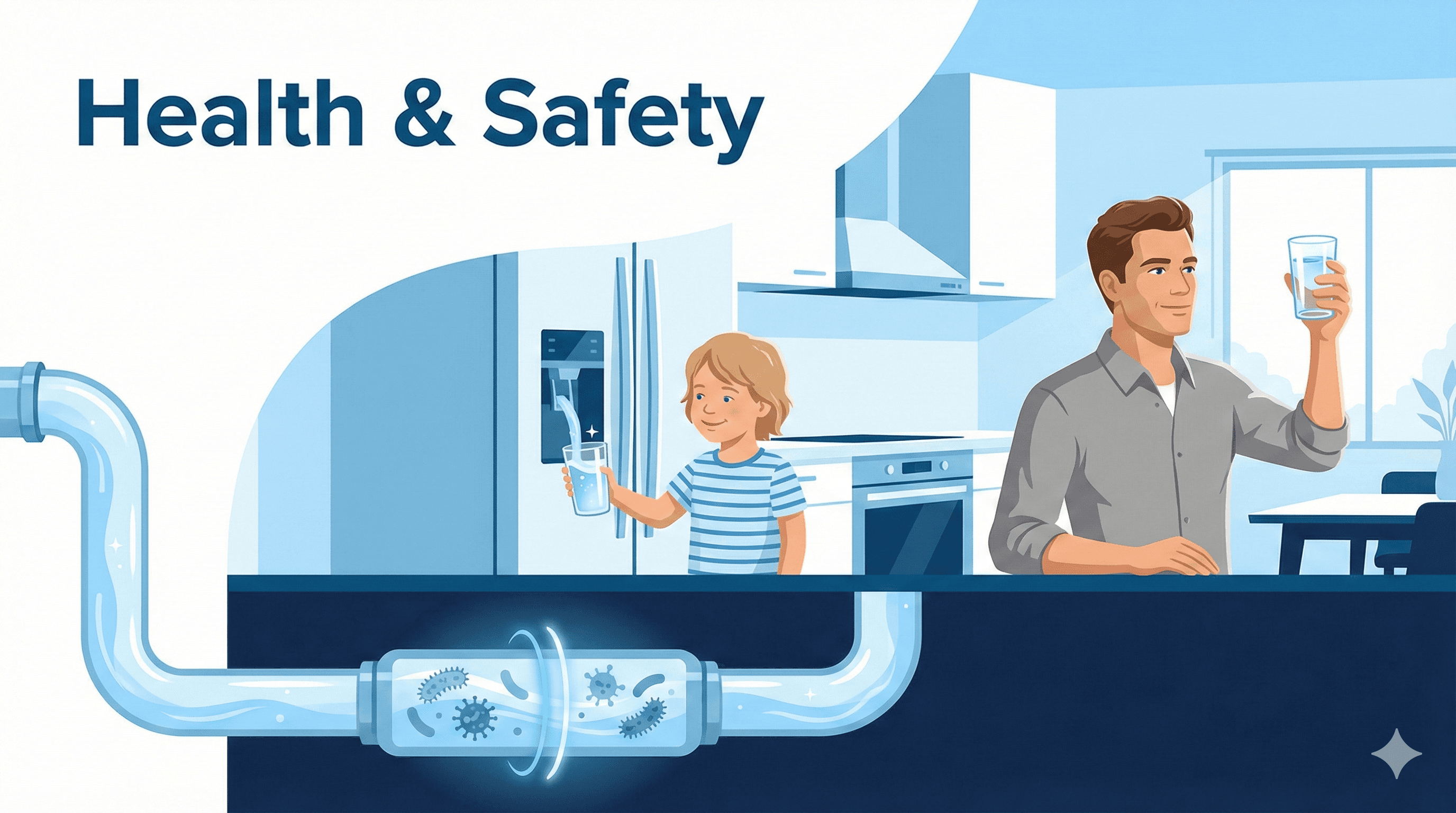
Is This Water Safe Today and Over Time?
Understanding the Hidden Health Risks in Your Water
Most of us think about water safety in simple terms:
Does it look clear? Does it smell fine? Did the city treat it?
But modern water safety is more complicated than that.
In the United States, more than 7 million people get sick every year from waterborne illnesses — roughly 1 in every 44 Americans. And while some of those illnesses are mild, many are not. Waterborne disease leads to over 600,000 emergency room visits, nearly 120,000 hospitalizations, and more than 6,600 deaths annually, costing the healthcare system $3.3 billion every year.
The uncomfortable truth is this:
Clean-looking water can still make you sick — today, or years from now.
Immediate Risks: When Water Makes You Sick Fast
Some waterborne threats act quickly. You drink, shower, or inhale contaminated water — and symptoms show up within hours or days.
Bacteria and Viruses That Cause Acute Illness
Pathogens like E. coli, norovirus, Salmonella, Campylobacter, and Shigella are responsible for hundreds of thousands of water-related illnesses each year.
Norovirus alone causes over 1.3 million waterborne illnesses annually, triggering severe vomiting and diarrhea.
E. coli outbreaks linked to drinking water, while less common, tend to be larger and more severe when they occur.
Campylobacter infections hospitalize about 1 in 5 patients, particularly affecting children and older adults.
These illnesses are often associated with:
Private wells or small systems
Plumbing contamination events
Breakdowns in disinfection or filtration
Most people recover — but not everyone. Infants, older adults, and people with weakened immune systems face higher risks of complications.
The More Dangerous Reality: Water That Harms You Over Time
Here’s where modern water safety becomes less intuitive — and far more serious.
While recreational water causes the most illnesses, drinking water causes the most deaths.
In fact:
Drinking water accounts for just 16% of waterborne illnesses
But it causes 50% of all waterborne disease deaths
Why?
Because the most dangerous pathogens today don’t come from obvious contamination — they come from inside plumbing systems themselves.
The Biofilm Problem: Bacteria That Live in Your Pipes
Inside pipes, water heaters, showerheads, and faucets, microscopic communities called biofilms form. These biofilms protect bacteria from disinfectants and allow them to grow quietly over time.
This is where the most lethal waterborne pathogens thrive.
Legionella: A Rapidly Rising Threat
Legionella bacteria, which cause Legionnaires’ disease, are now one of the fastest-growing waterborne threats in the U.S.
Reported cases have increased more than 5× since 2000
Estimated 8,000–18,000 hospitalizations every year
Up to 1,000 deaths annually
Many experts believe over 85% of cases go undiagnosed
Legionella spreads through inhalation, not drinking — most commonly from:
Showers
Faucets
Hot water systems
Building plumbing with low flow or stagnant water
It primarily affects adults over 50, smokers, and people with chronic health conditions — but exposure often happens at home.
Nontuberculous Mycobacteria (NTM): The Silent Killer
NTM represents the single deadliest category of waterborne pathogens in the U.S.
Each year, NTM causes:
~69,000 waterborne infections
Over 50,000 hospitalizations
~3,800 deaths
$1.5 billion in healthcare costs
NTM infections are:
Extremely difficult to treat
Often misdiagnosed
Associated with 12–18 months of antibiotic therapy
Research now shows that NTM doesn’t just survive water treatment — it multiplies inside building plumbing. Levels increase dramatically after water leaves the treatment plant.
Pseudomonas: Dangerous for the Vulnerable
Pseudomonas aeruginosa thrives in faucets, aerators, and showerheads.
Causes pneumonia, bloodstream infections, and sepsis
Responsible for ~730 deaths per year
Especially dangerous in homes with elderly residents or immune compromise
Again, the issue isn’t dirty source water — it’s what happens inside the pipes.
Why Modern Water Safety Is a “Last-Mile” Problem
Municipal treatment systems do an excellent job controlling traditional contaminants.
But today’s biggest health risks:
Grow after treatment
Live inside plumbing
Persist despite disinfectants
Increase with low flow, aging infrastructure, and warm temperatures
From 2015–2020:
87% of drinking water outbreaks were biofilm-related
97–98% of outbreak hospitalizations and deaths were caused by Legionella
In healthcare facilities, hotels, and homes alike, the weakest link is no longer the water plant — it’s the plumbing.
How SIPP Thinks Differently About Health & Safety
Most water systems focus on what goes into the water.
SIPP focuses on what happens after it gets to your home.
SIPP’s Health & Safety Approach
Continuous monitoring, not occasional testing
Focus on biofilm risk, not just contaminants
Real-time insight into water conditions that allow bacteria to grow
Protection against immediate illness and long-term exposure
SIPP looks at:
Water chemistry that affects bacterial growth
Conditions inside plumbing, not just source water
Trends over time — not just pass/fail results
Because water that’s “safe on paper” can still be unsafe in practice.
Why This Matters
Waterborne illness isn’t rare.
It isn’t always obvious.
And it isn’t just a developing-world problem.
Every year:
Millions get sick
Thousands die
Most never realize their water played a role
The question isn’t just:
Is my water treated?
It’s:
Is this water safe today — and will it still be safe years from now?
Learn More About Your Water
Understanding your water is the first step toward protecting your health.
Explore related articles on water quality, plumbing health, and biofilm risk — and if you want a clearer picture of what’s happening in your own home, start with a free water test.
We are a Techstars company
© 2026 SIPP Technologies Inc. All Rights Reserved
Contact us
drinksipp@sippsafely.com
Location
1728 Coates Pass
Hoover, AL 35244