technology
Jan 21, 2026
Home Infrastructure
Why do 1 in 4 home insurance claims come from water damage? Learn how water quality, pressure, and corrosion quietly destroy pipes—and how smarter monitoring can protect your home.
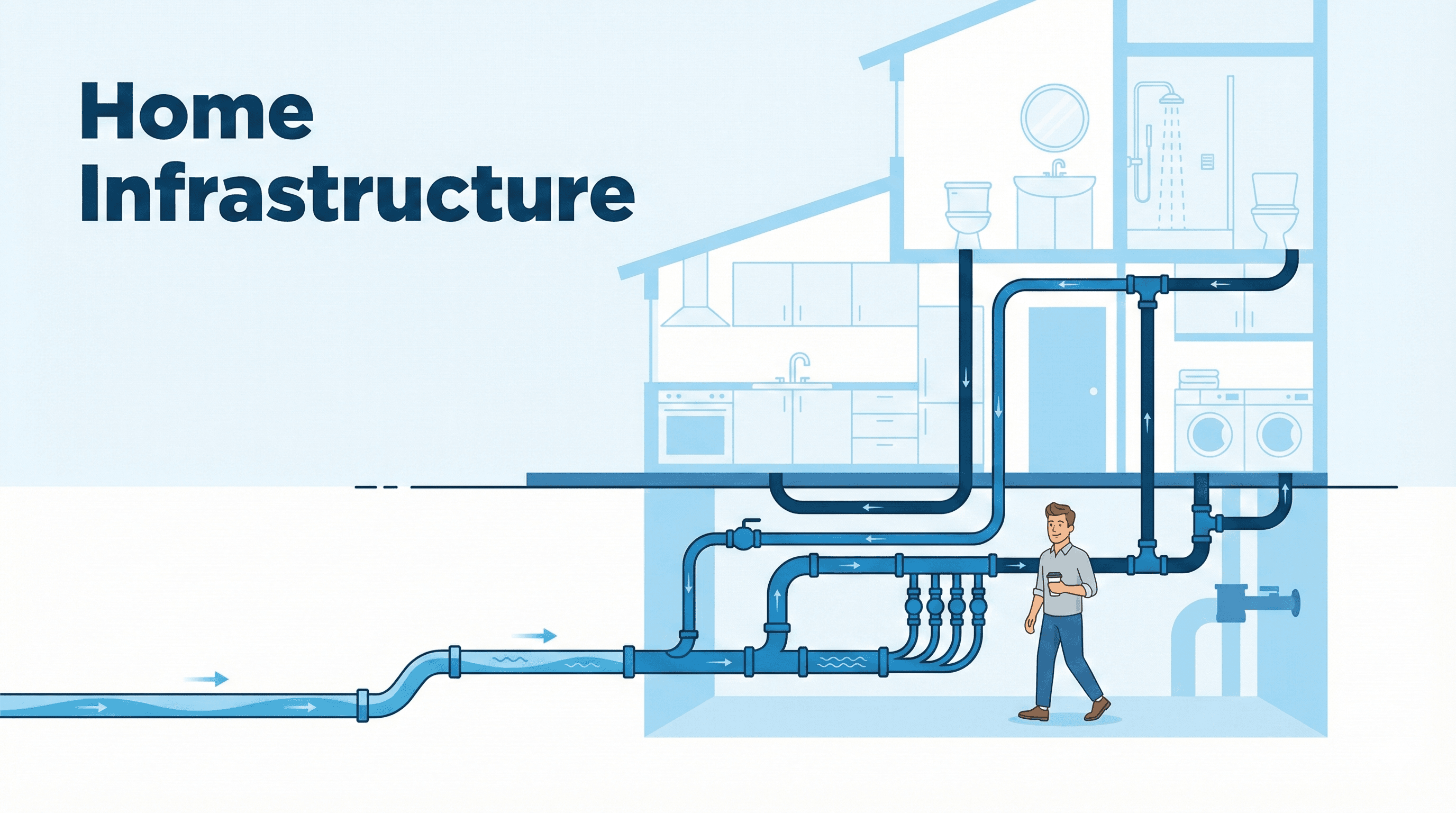
Home Infrastructure
How Water Quality Quietly Destroys Pipes — and Why 1 in 4 Insurance Claims Prove It
When people think about water quality, they usually think about taste, smell, or health.
But for homeowners, the biggest risk often isn’t what water does to your body — it’s what it does to your house.
In the U.S., between 22.6% and 27.6% of all home insurance claims stem from water damage and freezing. That means roughly one in four claims is tied directly to plumbing failure. Insurers pay over $13 billion every year, and more than 14,000 households file a water damage claim every single day.
This isn’t bad luck.
It’s physics, chemistry, and aging infrastructure — quietly at work.
Why Plumbing Failures Are So Common
Water damage is now the second most common homeowners insurance claim, trailing only wind and hail. Even more striking:
1 in 60 insured homes files a water damage or freezing claim each year
Average claims now range from $13,000–$25,000
Individual losses can exceed $1 million in catastrophic cases
What’s driving this?
👉 Failed plumbing is the #1 cause of water damage claims, especially in homes 16–40 years old — the exact era when millions of U.S. houses were built using materials now reaching (or exceeding) their lifespan.
The Hidden Role of Water Quality
Pipes don’t usually fail all at once.
They fail slowly, from the inside out.
Water chemistry determines how fast that process happens.
Corrosion in Older Homes: A Silent Countdown
Galvanized Steel Pipes
Used widely before the 1960s (and still installed into the 1990s), galvanized pipes have a built-in expiration date.
Over time:
The protective zinc coating erodes
Iron underneath begins to rust
Rust forms internal “tubercles” that restrict flow
Pressure drops, leaks form, and pipes eventually rupture
Many galvanized pipes last only 20–50 years depending on water quality — meaning millions of homes are already past the danger zone.
Even worse, galvanized pipes can store and release lead, especially when they were once connected to lead service lines. Some cities have measured dangerous lead levels even after lead lines were removed, because the contamination remained embedded in the pipe walls.
Copper Pipes Aren’t Immune
Copper is more durable — but far from invincible.
Water with:
Low pH (acidic)
Low alkalinity
High chlorine or chloramine
High dissolved oxygen
can actively dissolve copper from the inside.
Signs homeowners often miss:
Blue-green staining on sinks or tubs
Unexplained metallic taste
Gradually declining water pressure
These aren’t cosmetic issues — they’re early warnings of internal pipe loss.
Pinhole Leaks: When “New” Pipes Fail Fast
One of the most frustrating failures happens in newer homes.
Under aggressive water conditions, copper pipes can develop pinhole leaks in as little as 2–5 years.
These leaks are caused by pitting corrosion — a localized attack that drills straight through the pipe wall instead of thinning it evenly.
The result:
Tiny leaks hidden behind walls
Months (or years) of unnoticed moisture
Mold, insulation damage, and structural rot
A sudden, expensive discovery
This is why many homeowners are shocked to experience water damage in homes less than 20 years old.
Disinfectants: Necessary — but Destructive
Municipal water must be disinfected to protect public health.
But chlorine and chloramine come with tradeoffs.
Research shows:
As little as 1 ppm of chlorine can reduce copper pipe lifespan from 50+ years to 3–5 years under certain conditions
Chlorine reacts with copper to form corrosive compounds
Chloramines can break down protective oxide layers and accelerate metal leaching
Disinfection byproducts (like THMs and HAAs) continue forming inside household plumbing, interacting with corrosion scales and further weakening pipes over time.
Pressure: The Mechanical Stress Most Homes Ignore
Even perfectly balanced water chemistry can become destructive under pressure.
Water Hammer & Pressure Spikes
When valves close suddenly or pressure fluctuates, shockwaves travel through pipes. Over time, this leads to:
Weakened joints
Loosened fittings
Cracked pipes
Sudden bursts during high-stress events
Recommended household pressure is 40–60 PSI.
Many homes unknowingly operate well above that — especially when pressure regulators fail.
How SIPP Thinks Differently About Pressure
Most systems check pressure once — if at all.
SIPP Smart Home monitors water pressure continuously throughout the home, not just a single reading.
This allows SIPP to detect:
Persistently high baseline pressure
Sudden pressure spikes that increase water hammer risk
Irregular fluctuations that stress pipes, valves, and appliances
By tracking pressure patterns over time, SIPP helps identify mechanical stress before it turns corrosion into catastrophic failure.
Frozen Pipes: When Weak Pipes Finally Break
Every winter:
250,000+ homes suffer frozen pipe damage
Insurers pay $400–500 million annually
Average claims exceed $25,000
Freezing doesn’t usually break healthy pipes.
It breaks pipes already weakened by corrosion, pressure stress, or age.
Rust, thinning walls, and micro-fractures create perfect failure points when expanding ice increases internal pressure.
This is why homes with existing water quality issues are far more likely to suffer winter pipe disasters.
The Compounding Effect
These risks don’t act alone — they stack:
Corrosion weakens pipes
Pressure fluctuations stress weak points
Pinhole leaks hide damage
Freezing finishes the job
What feels like a “sudden” plumbing failure is often years in the making.
How SIPP Protects Home Infrastructure
SIPP treats water quality as infrastructure protection, not just filtration.
SIPP helps by:
Monitoring water chemistry that drives corrosion
Reducing disinfectant exposure that accelerates pipe decay
Tracking pressure trends that cause mechanical failure
Detecting early warning signs before damage becomes visible
Integrating smart alerts and preventive insights into daily life
Why This Matters
When 1 in 4 insurance claims trace back to plumbing failures, water quality isn’t a minor concern — it’s a structural risk.
Your pipes don’t fail because they’re old.
They fail because water chemistry, pressure, and time work together.
With SIPP, you don’t just react to damage.
You see it coming — and stop it before it happens.
We are a Techstars company
© 2026 SIPP Technologies Inc. All Rights Reserved
Contact us
drinksipp@sippsafely.com
Location
1728 Coates Pass
Hoover, AL 35244