technology
Jan 21, 2026
Skin, Hair, Laundry
Hard water and chlorine affect skin, hair, and laundry in nearly 90% of U.S. homes. Learn how water quality drives dryness, damage, and higher household costs.
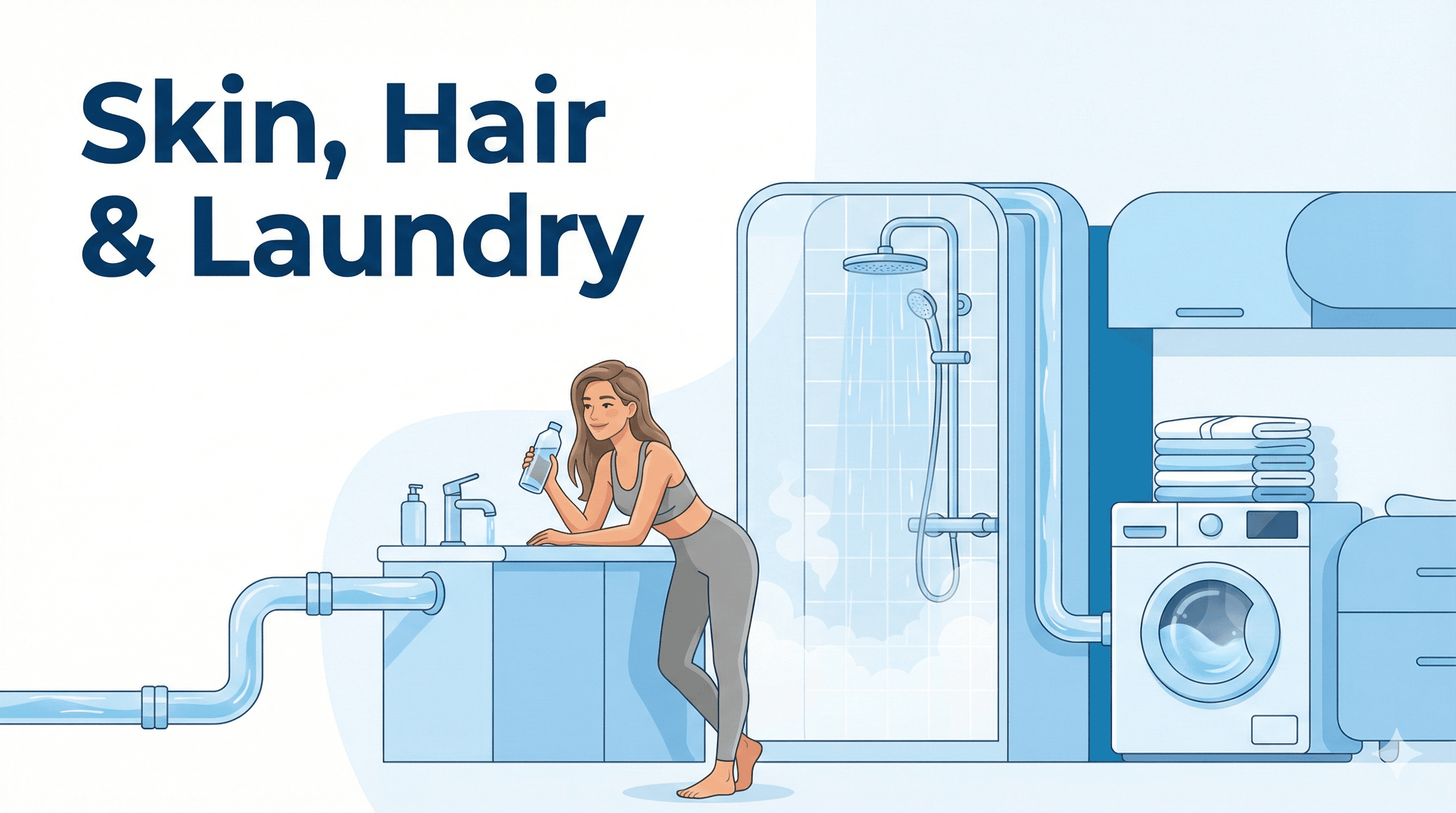
How Your Water Affects Skin, Hair, and Laundry
The Everyday Impacts Most People Don’t Connect to Water Quality
Water touches your body and your home more than almost anything else.
You shower in it.
You wash your hair with it.
You clean your clothes in it — hundreds of times every year.
Yet most people never think about water quality unless it affects taste or safety. In reality, water chemistry quietly shapes how your skin feels, how your hair behaves, and how long your clothes last.
And for most American households, the issue isn’t rare or niche — it’s nearly universal.
Hard Water Is the Norm, Not the Exception
85–90% of U.S. homes have hard water.
Hard water forms when groundwater dissolves calcium and magnesium from rock and soil. These minerals aren’t harmful to drink — but they dramatically change how water behaves when it touches skin, hair, fabric, and soap.
Many major U.S. cities regularly measure very hard water, including:
Indianapolis (up to 20 gpg)
Phoenix (16 gpg)
Las Vegas (16+ gpg)
San Antonio (15–20 gpg)
Minneapolis (15+ gpg)
Tampa (up to 17 gpg seasonally)
Water above 10.5 grains per gallon (≈180 mg/L) is considered very hard — and some regions exceed 300 mg/L.
That mineral load follows you into every shower, sink, and laundry cycle.
Skin: When Water Undermines Your Natural Barrier
The Hard Water–Eczema Connection
Hard water doesn’t just dry skin — it changes how skin functions.
Large population studies across the U.S. and Europe consistently show that people living in hard water areas are more likely to develop inflammatory skin conditions, especially eczema (atopic dermatitis).
Key findings:
Adults exposed to water hardness above 200 mg/L have 12% higher odds of eczema
Children in hard water regions show significantly higher eczema prevalence
Each 50 mg/L increase in hardness raises eczema risk by ~2–5%
20% of babies and young children already suffer from eczema — making water exposure especially important early in life
Why Hard Water Affects Skin
Hard water interferes with skin at a microscopic level:
Calcium and magnesium bind to soap, creating soap residue that sticks to skin
That residue increases transepidermal water loss (TEWL) — meaning moisture escapes faster
Natural oils are stripped away, leaving skin dry, itchy, and vulnerable
Skin pH shifts, weakening the barrier against irritants and bacteria
Moisturizers absorb less effectively because minerals block penetration
For people with eczema, psoriasis, or sensitive skin — especially those with genetic skin barrier weaknesses — these effects compound quickly.
Chlorine: A Necessary Tradeoff With Side Effects
Municipal water treatment relies on chlorine or chloramine to keep water microbiologically safe. That protection matters — but it comes with tradeoffs for skin health.
Chlorine exposure has been shown to:
Strip natural oils from skin
Increase dryness and irritation
Disrupt healthy skin bacteria
Trigger redness, rashes, or itching
Worsen eczema, dermatitis, acne, psoriasis, and rosacea
Contribute to premature skin aging by degrading collagen
When chlorine and hard water minerals combine, the drying effect intensifies — leaving skin tight, flaky, or persistently irritated after bathing.
Hair: Mineral Buildup You Can See and Feel
Hair is one of the fastest ways people notice water quality issues.
What Hard Water Does to Hair
Scientific imaging shows that hard water:
Leaves mineral deposits on hair shafts
Roughens the cuticle layer
Reduces hair shaft thickness
Weakens hair structure, increasing breakage
Prevents moisture absorption
Creates dullness, frizz, and stiffness
Studies comparing hard water to deionized water found that hard water significantly reduces hair strength, making hair more prone to snapping and split ends.
Scalp and Color Damage
Mineral buildup doesn’t stop at the hair shaft:
It can clog follicles, leading to itchy scalp and dandruff
It interferes with shampoos and conditioners, leaving residue behind
For color-treated hair, minerals accelerate fading and create brassy tones
Styling products become less effective, forcing people to use more
This is why many people experience hair that feels “off” after moving — without realizing the water changed.
Laundry: The Hidden Cost Most Households Miss
The average household runs 400+ loads of laundry per year, spending close to $500 annually on washing alone.
Hard water quietly drives that cost higher.
How Hard Water Damages Clothes
When detergent meets hard water, minerals neutralize cleaning agents and form detergent curd — a residue that embeds in fabric fibers.
The result:
Clothes wear out 15–40% faster
Whites turn gray or yellow
Colors fade unevenly
Fabrics feel stiff and scratchy
Fibers weaken and tear more easily
Dirt clings more stubbornly after washing
Some garments are discarded not because they’re worn out — but because mineral damage makes them uncomfortable or unattractive.
Detergent and Energy Waste
Hard water forces households to compensate:
More detergent
Hotter wash cycles
Extra rinse cycles
But research shows:
50% more detergent is often needed in hard water
90% of washing machine energy goes to heating water
Softened water allows effective washing in cold water
Soft water cleans better with less soap and lower temperatures
That translates to real savings — on detergent, energy, and clothing replacement.
What Changes When Water Is Softened
Consumer adoption reflects these benefits. 25% of U.S. households now use a water softener, nearly doubling since 2017.
Measured improvements include:
56% reduction in dry skin complaints
25% reduction in eczema symptoms
78% improvement in hair shine and manageability
Up to 90% reduction in mineral buildup on hair
50% reduction in detergent use
15–40% longer clothing lifespan
Many users notice changes within weeks — from better lather and softer skin to easier laundry and less residue throughout the home.
How SIPP Thinks Differently About Skin, Hair, and Laundry
Most water conversations stop at “Is it safe to drink?”
SIPP looks at how water behaves where it matters most day to day:
On your skin
In your hair
In your washing machine
Across hundreds of repeated exposures
SIPP’s Approach
Focuses on aesthetic and functional water quality, not just safety thresholds
Looks at hardness, chlorine, and mineral behavior together
Tracks how water quality affects comfort, performance, and long-term wear
Helps households understand why products stop working — not just that they do
Because water that’s technically safe can still:
Dry your skin
Damage your hair
Ruin your clothes
Increase household costs
Why This Category Matters
Skin irritation, dull hair, and worn-out clothes are often treated as personal problems.
In reality, they’re often water problems.
With hard water affecting nearly every U.S. household — and strong evidence linking water quality to eczema, psoriasis, hair damage, and fabric wear — understanding your water is one of the simplest ways to improve daily comfort.
The question isn’t:
Is my water bad?
It’s:
Is my water working against me — every single day?
Learn More About Your Water
Understanding your water quality helps you make better decisions — for your skin, your hair, and your home.
Explore related articles or start with a water assessment to see what your water is doing beneath the surface.
We are a Techstars company
© 2026 SIPP Technologies Inc. All Rights Reserved
Contact us
drinksipp@sippsafely.com
Location
1728 Coates Pass
Hoover, AL 35244