technology
Jan 21, 2026
Water Quality 101
Water quality isn’t static. Learn what water quality really means, why it changes by location and season, how it affects your health and home, and how to protect it through testing and monitoring.
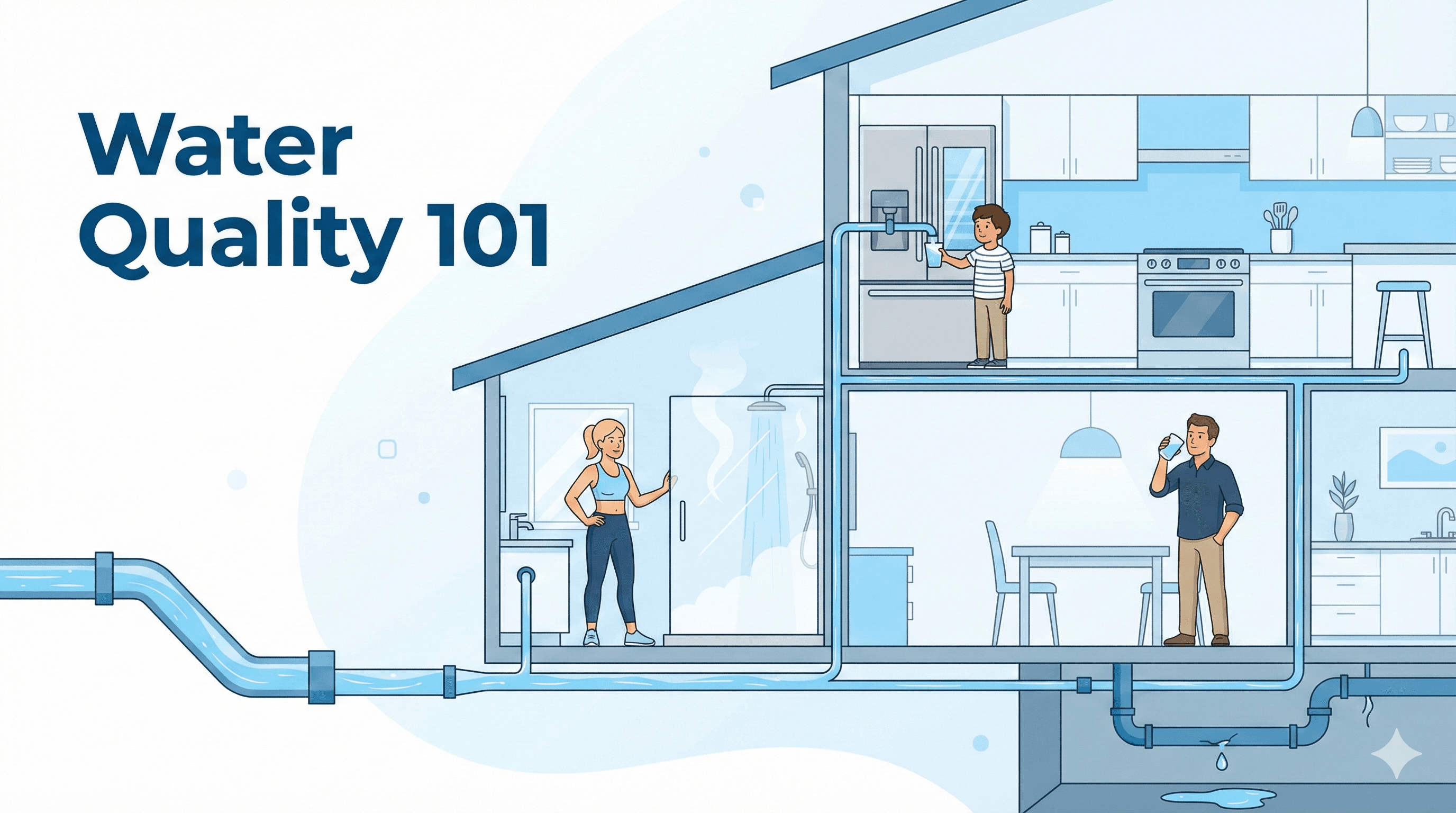
Water Quality 101: What It Is, Why It Changes, and Why It Matters to You
Water quality isn’t a single number or a one-time check. It’s a living system—shaped by where you live, the season, your home’s plumbing, and what’s happening upstream and underground.
Most people assume water quality is either “safe” or “unsafe.” In reality, it’s much more nuanced. Water can meet regulatory standards and still cause health issues, damage your home, irritate your skin, or taste unpleasant.
Understanding water quality starts with one simple question:
Is this water safe—and supportive—for you and your home today and over time?
This guide breaks down what water quality really means, why it fluctuates, how it affects your life, and how SIPP approaches protecting it.
What Is Water Quality?
Water quality refers to the physical, chemical, and biological characteristics of the water coming into your home. It includes things like:
Microorganisms (bacteria, viruses, parasites)
Metals and chemicals
Mineral content
Disinfectants and byproducts
pH, pressure, and temperature
How water looks, smells, and tastes
Municipal water treatment does an excellent job of making water broadly safe at scale—but water quality doesn’t stop at the treatment plant. From there, water travels through miles of aging infrastructure, neighborhood pipes, and finally your home’s plumbing, where conditions can change dramatically.
Why Water Quality Changes Over Time
Water quality is not static. It fluctuates constantly due to several factors:
Geography
Water sources vary by region (surface water vs. groundwater)
Local geology affects mineral content (hardness, iron, manganese)
Older cities often have aging pipes that influence water chemistry
Seasonality
Warmer temperatures encourage bacterial growth
Heavy rain can introduce sediment, runoff, and contaminants
Droughts concentrate minerals and chemicals
Seasonal disinfection changes can alter taste and odor
Infrastructure & the “Last Mile”
Pressure changes can dislodge sediment
Corrosion inside pipes can release metals
Biofilms can form inside plumbing, harboring bacteria
Low-flow conditions allow stagnation
In short: the water quality at your tap can look very different from the water quality leaving the treatment plant.
How Water Quality Affects You and Your Home
Water touches nearly every part of daily life. Its impact falls into four interconnected categories:
1. Health & Safety
This is the most critical category—and the one people often oversimplify.
Immediate Risks
Some threats can make you sick quickly:
Bacteria like E. coli and Pseudomonas
Viruses such as norovirus
Opportunistic pathogens like Legionella, which thrive in plumbing biofilms
Parasites like Giardia and Cryptosporidium
These organisms don’t always come from source water. Many grow inside building plumbing systems, especially when water stagnates or temperatures rise.
Long-Term and Latent Risks
Other threats build silently over time:
Heavy metals (lead, copper)
Industrial and agricultural chemicals
Disinfection byproducts
Chronic exposure to low-level contaminants
These may not cause immediate symptoms, but prolonged exposure has been linked to developmental issues, organ damage, and increased disease risk.
Health & safety isn’t just about avoiding emergencies—it’s about reducing cumulative exposure over years.
2. Home Infrastructure
Your water can quietly damage your home long before you notice a problem.
Hard water causes scale buildup in pipes, heaters, and appliances
Corrosive water accelerates pipe degradation
Sediment and mineral deposits reduce efficiency and lifespan
Pressure fluctuations strain plumbing joints and fixtures
Even small, repeated pressure spikes can weaken pipes over time, increasing the risk of leaks or catastrophic failures. Water quality and water pressure are deeply connected—and both matter for protecting your home.
3. Skin, Hair, & Laundry
Water doesn’t just affect what you drink—it affects what touches you daily.
Hard water strips natural oils from skin and hair
Chlorine and disinfectants can irritate sensitive skin
Mineral residue dulls hair and fades color
Detergents work less effectively, leaving residue behind
Fabrics wear out faster and feel stiff or scratchy
For many people, unexplained dryness, irritation, or laundry issues aren’t personal—they’re chemical.
4. Color, Taste & Odor
These are often dismissed as “just aesthetic,” but they play a huge role in trust and behavior.
Chlorine causes chemical taste and smell
Iron and manganese discolor water and fixtures
Sediment creates cloudiness
Organic compounds cause musty or earthy odors
When water looks, smells, or tastes off, people stop drinking it—often replacing it with bottled water or sugary alternatives. Aesthetic issues don’t always mean water is unsafe, but they do signal changes worth paying attention to.
What You Should Do About It: Test, Monitor, Protect
Most water systems are reactive. Problems are addressed after complaints, illness, or damage occurs.
SIPP takes a different approach.
1. Test
You can’t manage what you don’t measure.
Establish a baseline for your water
Identify hidden or emerging risks
Understand how your home compares to your area
2. Monitor
Water quality changes—so monitoring matters.
Track trends over time
Detect pressure changes, contamination events, or system shifts
Separate home-specific issues from community-wide ones
3. Protect
Protection should be proactive and automatic.
Filtration and UV disinfection for health protection
Monitoring to catch issues early
Smart alerts instead of surprises
Maintenance that happens before damage does
How SIPP Thinks Differently
SIPP isn’t just about cleaner water—it’s about intelligent water care.
We believe:
Water quality is dynamic, not static
Protection should extend beyond regulations
Homes deserve the same level of monitoring as critical infrastructure
Convenience is essential for consistency
Community data makes individual insights stronger
By combining testing, real-time monitoring, smart home integration, and proactive protection, SIPP helps ensure your water is safe today and over time—for your health, your home, and your peace of mind.
The Bottom Line
Water quality isn’t one problem—it’s many small ones adding up over time.
Understanding it is the first step.
Monitoring it is the second.
Protecting it is the commitment.
With SIPP, water quality becomes something you understand, trust, and don’t have to worry about—because your system is always paying attention, even when you’re not.
We are a Techstars company
© 2026 SIPP Technologies Inc. All Rights Reserved
Contact us
drinksipp@sippsafely.com
Location
1728 Coates Pass
Hoover, AL 35244